.webp)
How Slay the Spire Revolutionized Roguelike Deckbuilders
The Birth of a Genre
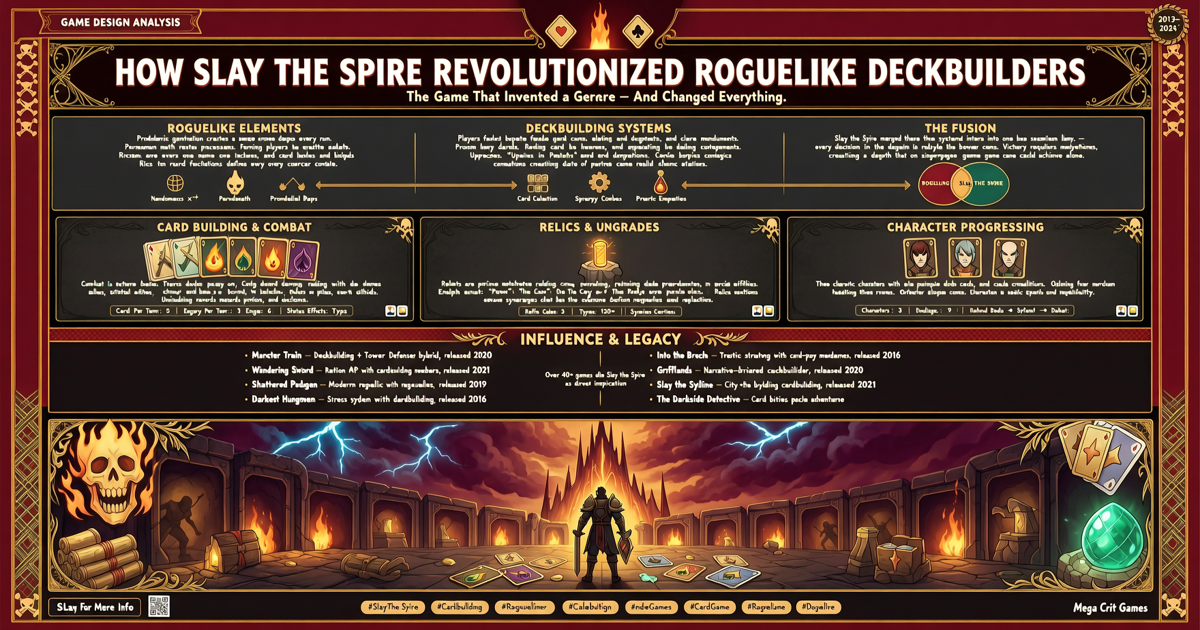
In 2017, an unassuming indie game called Slay the Spire launched into Early Access, and within months, it had spawned an entirely new genre. Combining the strategic depth of deckbuilding card games with the replayability and permadeath of roguelikes, Slay the Spire proved that you don't need flashy graphics to captivate millions. Its success didn't just sell copies—it inspired a wave of developers to explore hybrid genres, leading to titles like Monster Train, Griftlands, and Across the Obelisk. But what exactly made Slay the Spire so revolutionary?
Core Innovations

Procedural Synergy Over Raw Power
Unlike traditional card games where pre-built decks dominate, Slay the Spire forces players to adapt. Each run offers random card rewards, relics, and encounters, encouraging dynamic synergy-building. The game's genius lies in making every decision matter—from skipping a card to choosing a path on the map. Players must weigh short-term gains against long-term viability, a lesson many deckbuilders now emulate.
Relics as Game-Changers
Relics in Slay the Spire are more than mere stat boosters. They modify core mechanics, often creating powerful combos. For example, the Dead Branch exhausts cards and adds random ones, completely shifting a deck's strategy. This variety ensures no two runs feel identical, a hallmark of the roguelike experience.
Impact on Game Design
Slay the Spire's success prompted a flood of imitators and innovators. Key lessons include:
- Accessibility: Simple to learn, but brutal to master. The game's intuitive UI and clear feedback loops lowered the entry barrier.
- Risk-Reward Decisions: Every choice, from fighting elites to opening chests, carries potential consequences.
- Deep Strategic Layers: Understanding card synergies, enemy patterns, and relic interactions takes dozens of hours, yet the game remains approachable.
Developers realized that procedural generation could be applied to narrative as well. Games like Griftlands weave randomized social mechanics into deckbuilding, while Ratropolis adds tower defense. Slay the Spire proved that roguelike deckbuilding isn't a niche—it's a flexible framework.
Beyond the Spire
The genre has since evolved. Monster Train layers vertical combat and multiple floors; Wildfrost introduces frost effects and pet companions. Even major studios took notice: Hearthstone added roguelike modes, and Destiny 2 flirted with card mechanics. Slay the Spire's influence extends to mobile gaming, with titles like Night of the Full Moon and Dawncaster thriving on the formula.
Why It Matters
Slay the Spire's legacy isn't just about sales numbers. It democratized strategic gaming, proving that a small team can create genre-defining experiences. Its focus on thoughtful design over spectacle resonated with players tired of bombastic AAA releases. The game's modding community further extended its life, with fan-made characters and expansions keeping the spire climb fresh.
Ultimately, Slay the Spire taught the industry that hybrid genres can create entirely new play experiences. It's a testament to innovation—and a masterclass in how a single idea, executed with precision, can change gaming forever.